May 18, 2026
Talent Acquisition

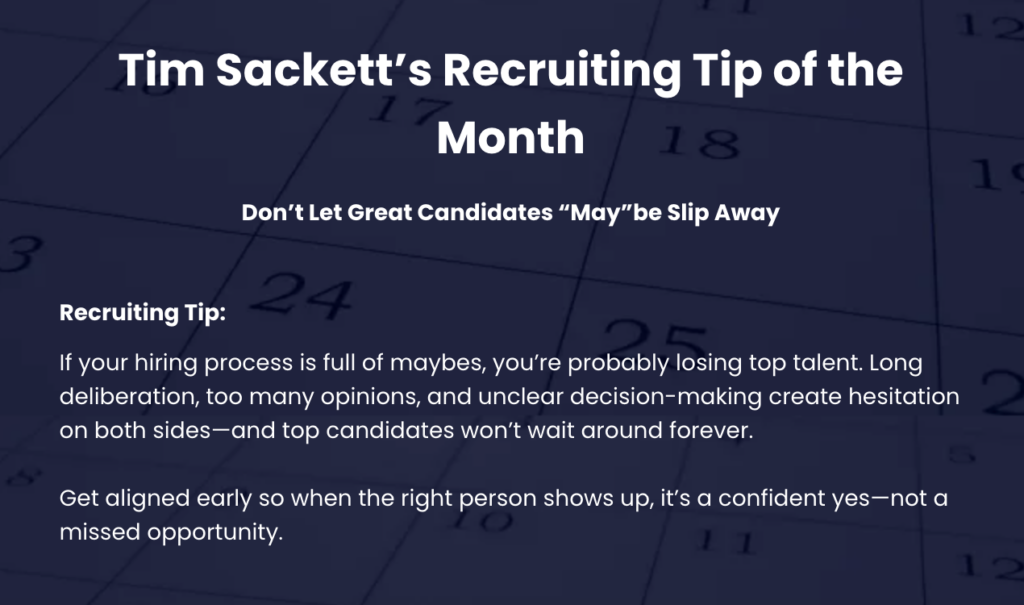
Don’t Let Great Candidates “May”be Slip Away! May’s newsletter tip by Tim Sackett…
Hiring today isn’t just about finding qualified candidates—it’s about securing them before someone else does. And more often than not, companies aren’t losing candidates because of compensation, competition, or even role fit. They’re losing them because of hesitation.
Indecision is one of the most overlooked (and expensive) problems in recruiting.
When a hiring process is filled with “maybes,” it creates friction at every step. Maybe we should see a few more candidates. Maybe we need another round of interviews. Maybe we should get one more opinion. While those may seem like reasonable thoughts in the moment, they add up quickly—and candidates can feel it.
Top talent doesn’t stay on the market long. The strongest candidates are often juggling multiple opportunities, and they’re paying close attention to how companies make decisions. A slow, uncertain process doesn’t just delay hiring—it signals disorganization, lack of alignment, or even a lack of genuine interest.
And that hesitation? It works both ways.
While your team is debating, candidates are evaluating. They’re asking themselves: Do they really want me? Is this company decisive? What would it be like to work here? If the experience feels drawn out or unclear, it’s easy for them to disengage—or accept another offer where the process felt more confident and intentional.
A big part of the issue comes down to internal alignment. Many hiring teams don’t get on the same page early enough. Without clear agreement on what success looks like in the role, what the must-haves truly are, and who owns the final decision, every candidate becomes a discussion instead of a decision.
That’s where strong recruiting processes stand out.
The most effective teams do the work upfront. They define what they’re looking for before interviews begin. They streamline the number of decision-makers. They set expectations around timelines—and stick to them. So when the right candidate comes along, they’re ready to act.
Because the reality is, great hiring isn’t about eliminating all risk. It’s about recognizing the right opportunity and having the confidence to move forward.
If your process is consistently ending in “maybes,” it’s worth taking a closer look. Where are decisions getting stuck? Who needs to be aligned earlier? What’s slowing things down?
Small adjustments can make a big difference—not just in time-to-fill, but in the quality of talent you’re able to secure.
At the end of the day, the goal isn’t to see every possible option. It’s to recognize the right one when it’s in front of you—and not let it slip away.
As featured in the May 2026 HRU Tech newsletter: