July 30, 2026
Interviews

You made it past the resume stage. Great. Now the real decision happens.
Here’s the thing—most candidates accidentally sabotage themselves in ways they don’t even notice. Small choices that add up to “we liked them, but…” Let me walk you through what I’ve actually seen cost people the job.
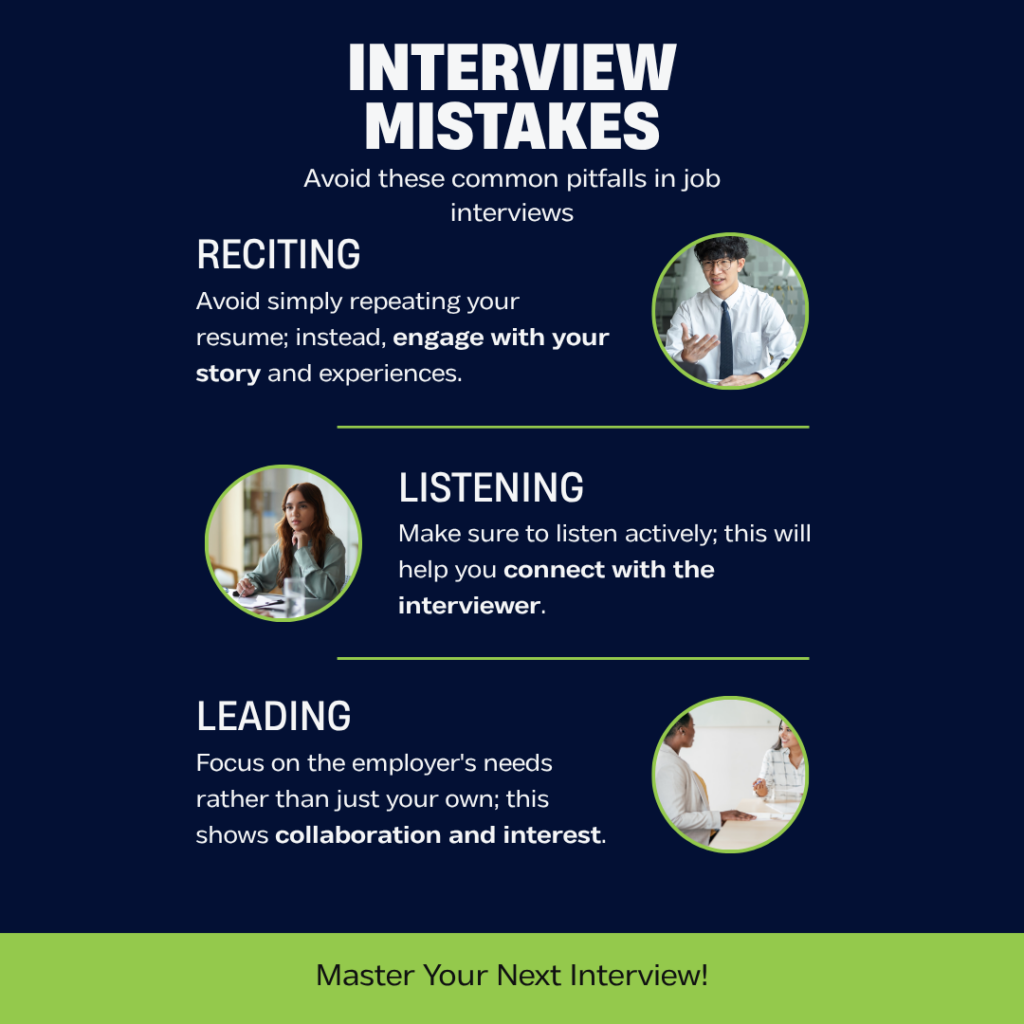
You’re Reciting Your Resume
Someone asks “Tell me about yourself” and you basically read LinkedIn back at them. Boring.
Tell a story instead. Pick one thing from your background that matters for this role, and explain why it led you here. “I worked in operations for three years and realized I loved solving problems that actually affected people” lands way different than just listing your job history.
You’re Not Actually Listening
The interviewer asks a specific question. You hear the first few words, then your brain delivers the answer you prepared.
Listen to the full question. If they ask about a difficult team dynamic, don’t just tell them about any conflict. Answer thatquestion. Interviewers notice when you’re actually paying attention.
You’re Leading With What You Want
You need this job. You need health insurance. You need better pay.
Don’t lead with that. Lead with what you can do for them. Problems you’ve solved. Impact you’ve made. Yes, you’ll ask about benefits eventually. But most candidates spend too much time on “what’s in it for me.”
Flip it around. Show them why they need you first.
You’re Not Asking Good Questions
They ask “Any questions for us?” and you say no.
Ask something real. “What does success look like in this role after six months?” or “What’s the biggest challenge this team is facing?” It shows you’re actually thinking beyond just landing the job.
You’re Staying Generic
You had time to prepare. Use it.
The candidate who says “I love tech and collaboration” sounds like everyone else. The one who says “I noticed you’re expanding into healthcare—I know that space” is someone who did their homework.
Know the company. Know the role. Reference something specific.
You’re Not Being Human
Maybe you stumble. Maybe you pause. Maybe you admit you don’t know something.
That’s fine. That’s real.
The most authentic candidates aren’t trying to be “interview perfect.” They answer honestly. They make eye contact. They smile when they mean it.
Most interview mistakes aren’t about not being qualified. They’re about not showing who you are or not showing you actually care about this specific job.
Hiring managers can tell the difference every single time.
So before your next one: Practice your stories, but don’t memorize scripts. Learn about the company. Show up as yourself.
You’ve got this.