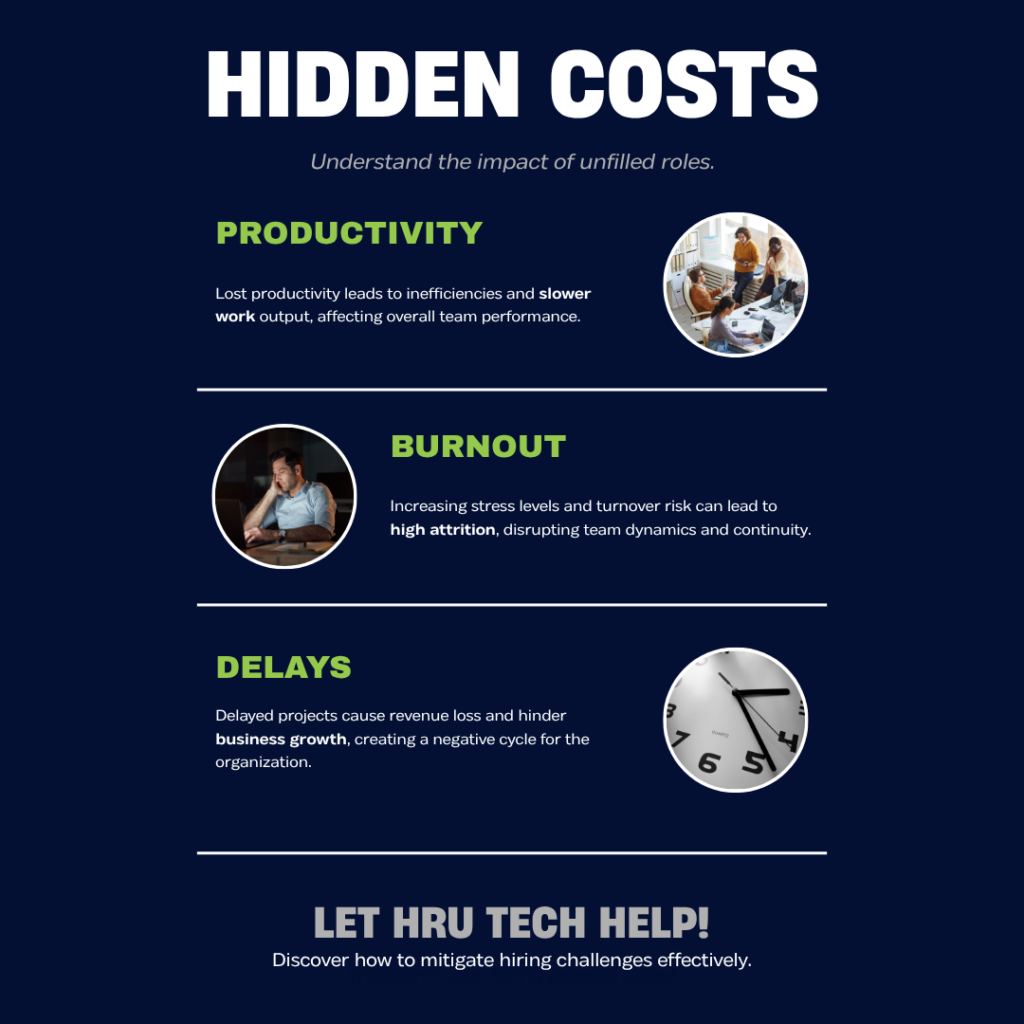

Open roles can sit around. It happens.
But what a lot of teams don’t realize is how quickly the cost of an unfilled position adds up. And it’s usually a lot more than expected.
Most people think about hiring in terms of salary or recruiting fees. But the cost of vacancy goes way beyond that.
Lost productivity adds up fast
When a role sits open, the work doesn’t just disappear.
It gets pushed onto other team members. Projects slow down. Deadlines slip.
Over time, that creates a real impact of open roles across the business:
- Missed timelines
- Lower output
- Teams spending time outside their core responsibilities
Even a single unfilled role can start to affect multiple areas of your operation.
Burnout is real (and expensive)
When your team is covering extra work for too long, it catches up.
People get stretched thin. Morale dips. Small frustrations turn into bigger ones.
And in some cases, you’re not just dealing with one open role anymore—you’re risking more turnover.
That’s where the cost of unfilled positions really starts to grow. Replacing one role is one thing. Replacing multiple because of burnout is a different problem.
Delayed projects = lost revenue
This is the part that often gets overlooked.
When key roles stay open:
- Projects get delayed
- New initiatives get pushed back
- Revenue opportunities can stall
Depending on the role, the cost of vacancy can directly impact your bottom line.
The longer it sits, the harder it gets
There’s also a momentum factor.
The longer a role is open, the harder it can be to fill. Candidate pools shift, urgency increases, and hiring teams sometimes rush decisions just to get someone in the seat.
That can lead to a poor fit—and now you’re starting the process over again.
So what’s the real hiring ROI?
When you look at all of this together, hiring ROI becomes a lot clearer.
It’s not just about the cost to hire. It’s about:
- How quickly you can fill the role
- How strong the candidate fit is
- How much disruption you avoid along the way
That’s where having extra support can make a difference.
Working with a staffing partner can help you move faster, tap into a larger candidate pool, and reduce the overall impact of open roles on your team.
If you’ve had a role open longer than it should be, it might be worth taking a second look at what that delay is actually costing you.
If hiring is on your mind as you head into the rest of the year, HRU Tech is here to help. We’d love to chat and learn more about your hiring headaches!